Where are we not looking?
‘Fail forward’ is a cliché. But we use it frequent. It’s a reminder that mistakes, failures, errors happen. And that individuals and teams grow when we learn from those failures.
Stanford GSB professor Steve Callander asks a question related to this that is worth pausing to consider more fully. When you run into the inevitable obstacle, detour, or bump in the road:
Not only what did you learn, but how can you optimally learn from that experience?
Here’s what I’d add:
It sounds simple, but it isn’t.
Callander’s research on correlated learning shows that the outcomes of different choices are connected. What you try tells you something, not just about that choice but also about the options you didn’t explore.
Here’s why this matters for you as a leader.
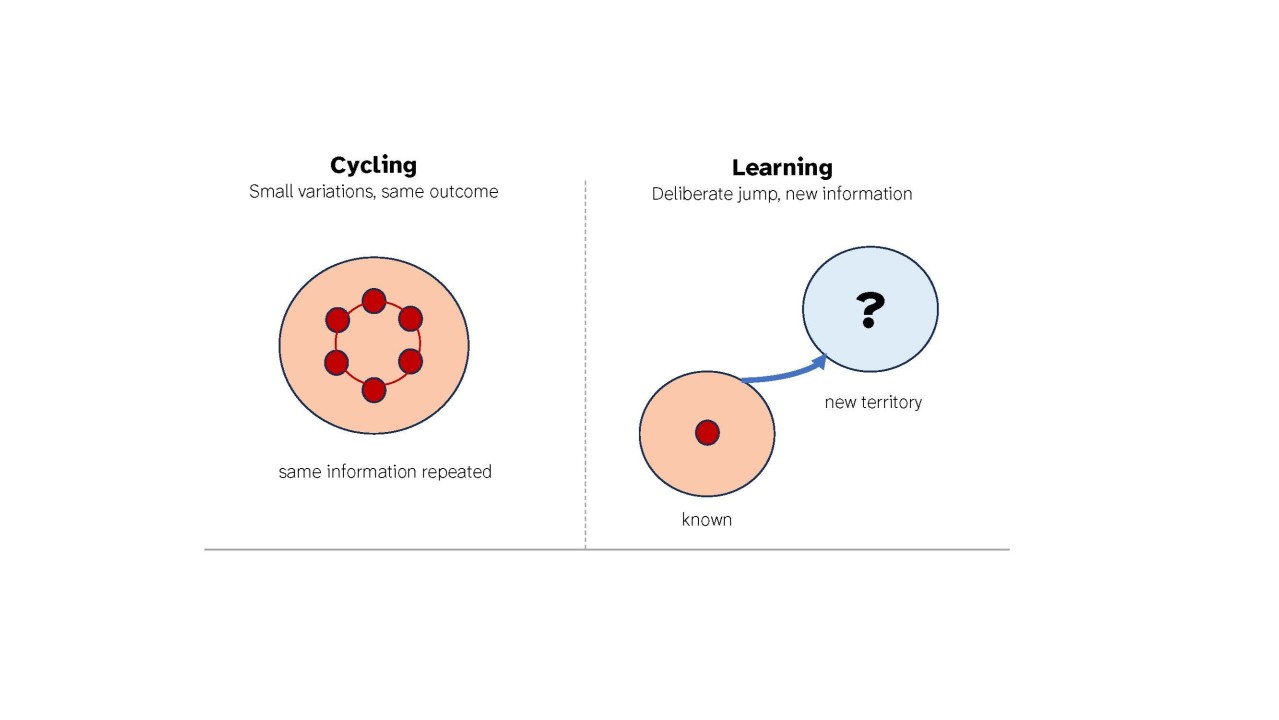
When an initiative doesn’t land, most teams make a small adjustment and try again. It might be a slightly different rollout. Perhaps a new timeline. Could be the same strategy with a fresh name. In correlated learning terms, these teams are choosing a nearby alternative. And in reality, that nearby alternative – that little tweak – is likely to produce a similar outcome without additional insight.
Which means the team is not really learning. They’re cycling.
This is what organizational drift looks like from the inside. It isn’t dramatic failure, just the quiet accumulation of small variations on what isn’t working. Each of those variations generates almost no new information about what will lead to success.
The question worth asking after a failed initiative isn’t just: What went wrong? Ask:
What does this outcome tell me about the other options I haven’t tried?
That’s a different kind of reflection, and it demonstrates a different kind of leadership.